







Solar Panels & Renewable Energy at the South Pole
The Challenge
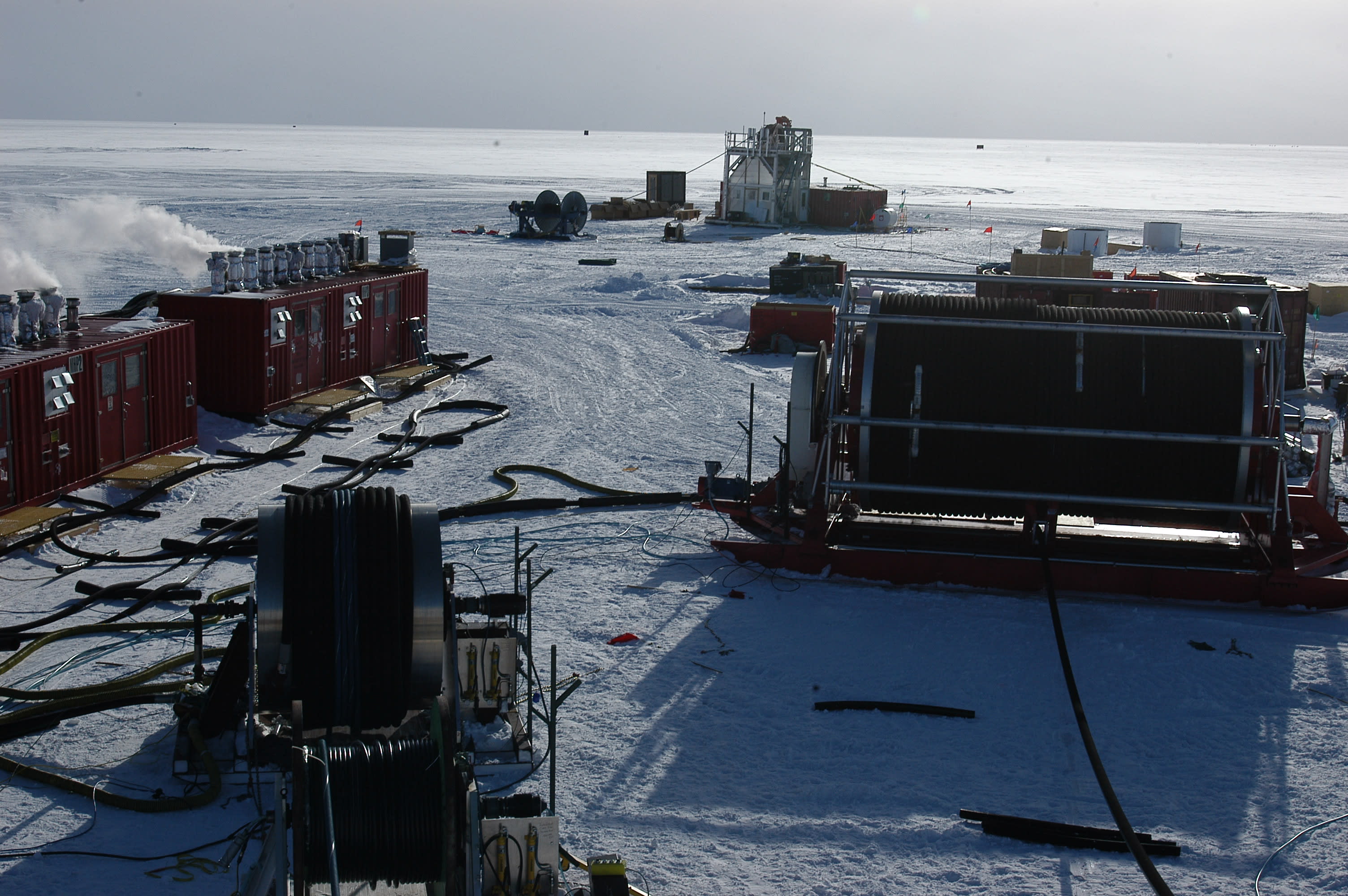
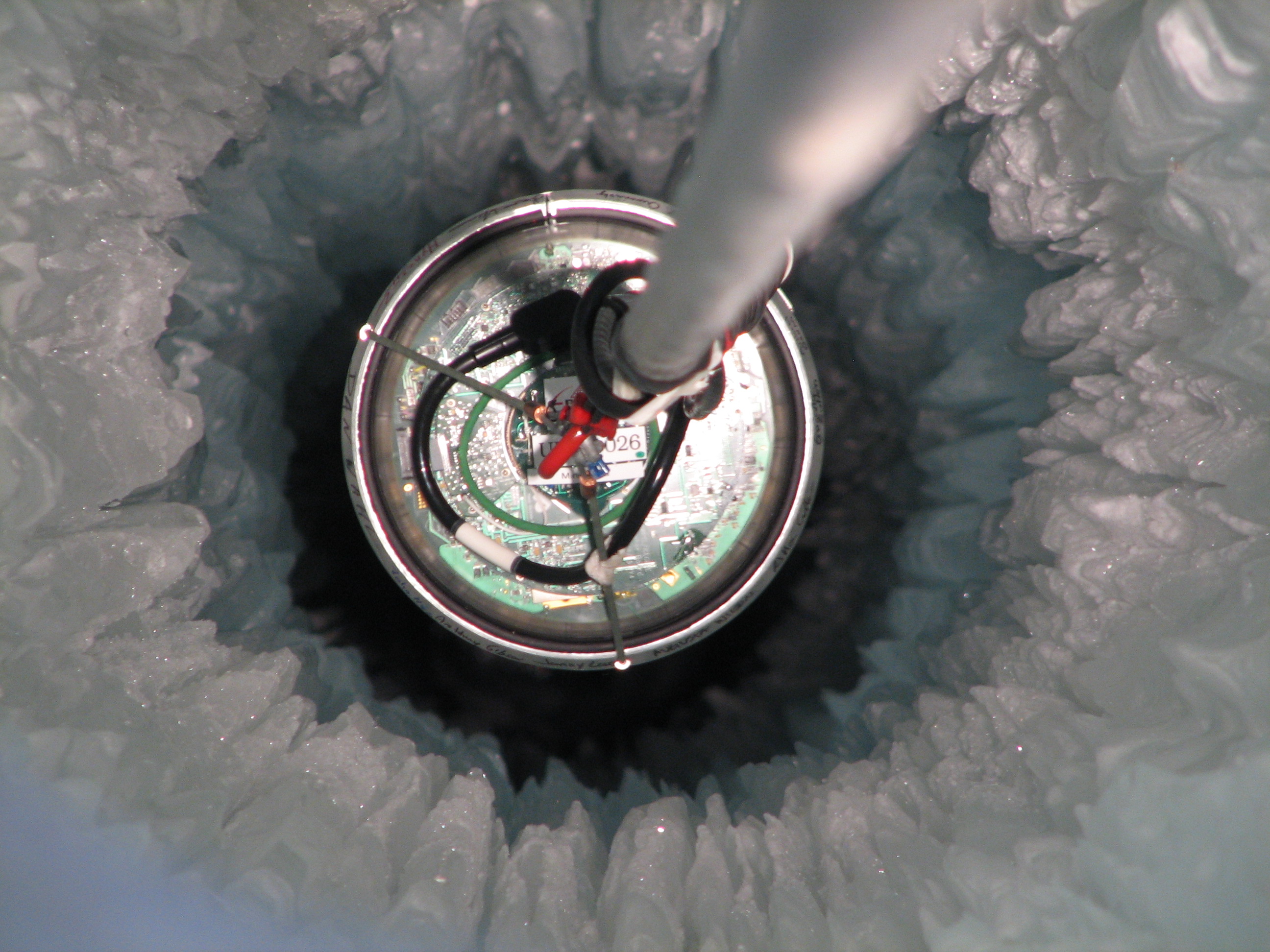
Solar energy project began with a simple but stubborn problem: at the South Pole, power is never just about electricity. Every gallon of fuel is expensive, difficult to transport, and hard to manage safely in one of the most remote places on Earth. That challenge becomes even more serious for IceCube-Gen2, the planned next-generation expansion of the IceCube Observatory. The project involves 120 additional strings, a large surface array, and a 500 km² radio array, along with the transport of roughly 10,000 optical sensors and the drilling of hundreds of holes to depths of about 2,600 meters. Each hole takes roughly 40 to 50 hours to drill and is expected to require about 6,000 gallons of fuel, while deep drilling over the full construction period could consume about 918,000 gallons in total. My project asks whether some of that burden can be reduced by using renewable energy in a place where logistics are often as challenging as the science itself.
Modeling and Simulation
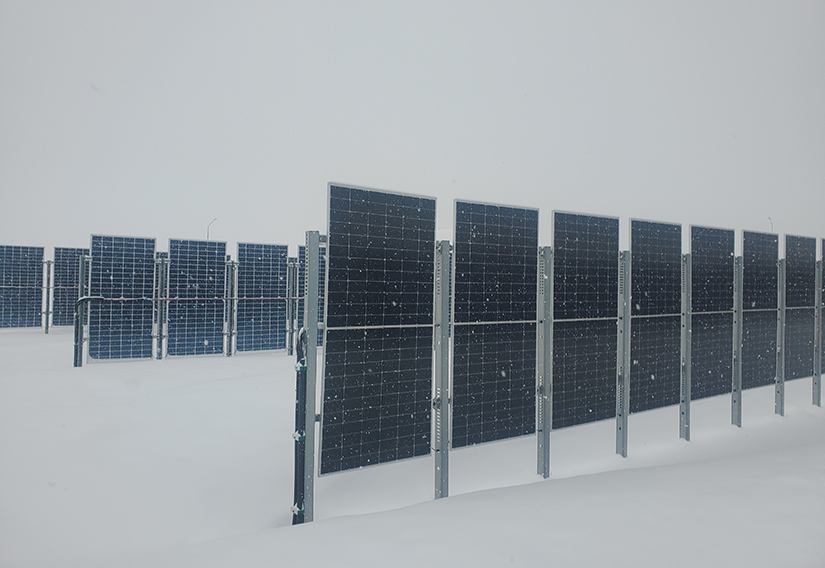
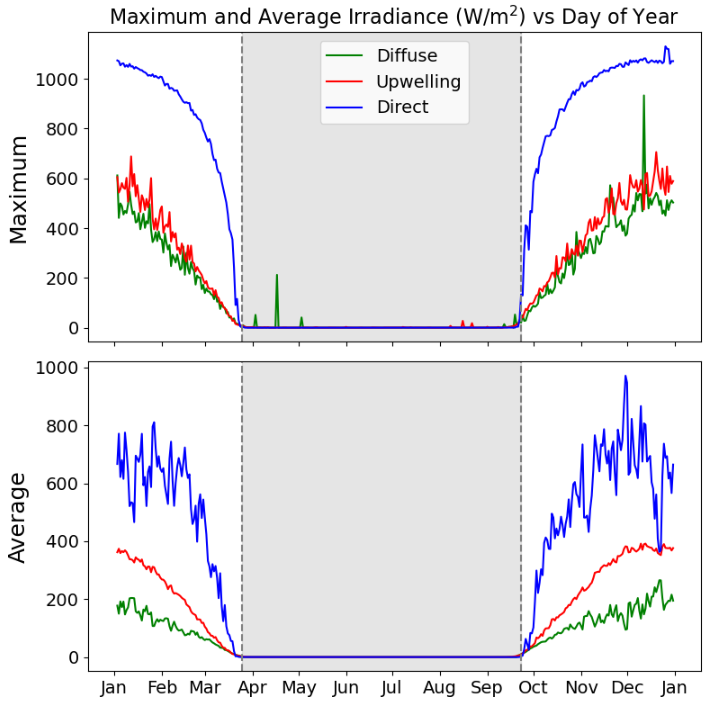
What followed was not just a test, but the beginning of a full modeling effort. We measured panel performance for different orientations, tracked how output changed with the angle between the panel and the Sun, and developed Python tools to interpolate the data and predict power for any given incident angle. We then combined those results with more than a decade of NOAA South Pole irradiance data to build a simulation framework based on direct, diffuse, and upwelling radiation. This is important because the South Pole is a surprisingly interesting place for solar power: during the austral summer, the Sun stays above the horizon roughly from mid-September to mid-March, reaches about 23.4° in December, and there are about 120 days with the Sun more than 10° above the horizon. Fresh snow can also have an albedo as high as 0.98, meaning a large fraction of light is reflected back toward the panel. Even though the Sun remains low and atmospheric extinction becomes important near the horizon, the combination of continuous daylight, low temperatures, and strong reflection makes bifacial solar especially promising.
Toward Field Validation
The project is now moving from analog testing and simulation toward direct field validation. We have already shipped four bifacial solar panels and additional electronics to support South Pole testing, and the planned test station includes bifacial panels, a 4 Ω / 500 W braking resistor, 48 V / 600 W cartridge heaters, and continuous voltage-current monitoring so that we can measure real power output through the austral summer while also exploring whether solar can make a small contribution to drill-camp heating. The larger goal is not only to prove that a solar panel can operate in Antarctica, but to understand reliability, maintenance needs, and the practical pathway from a small field test to a renewable energy system that can support future IceCube-Gen2 operations. For me, that is what makes this project exciting: it connects sustainability with discovery. If we can reduce the fuel burden at the South Pole, we are not just saving energy—we are making some of the most ambitious science on Earth more practical to build and sustain.